One Woman, One Brand
Abundance A to Z: affirmations from A to Z, grown from a book into an oracle deck and a one-woman brand
How a book of poetry became an affirmation book, an oracle deck, and a whole brand — designed live on the internet by one woman with no design team.
Abundance of Affirmations (UX Case Study)
"I Thought I Was Updating a Webpage of Links: How Abundance from A to Z Became a Brand"
Case study on how I updated a website from Carrd links to a full online stationery store.
Abundance from A to Z: a book, a 30-card oracle deck of everyday affirmations, stationery line, and brand built around it.
The 30 days in 2 minutes 25 seconds — DesignGarden Showcase Night, November 13, 2026. Music: 'Wildflowers' by Scott Buckley — released under CC-BY 4.0. www.scottbuckley.com.au
What I set out to do
Take Abundance from A to Z from a book and a deck into a real, shoppable brand.
I thought I was just updating my Carrd link website. Instead I launched a working online shop at abundanceatoz.com, finished the product line around it, and got ready to tell my one-woman-band creative-product story — poetry book → affirmations book → oracle deck → full brand — as a case study for Showcase Night.
It started with poems
A good book isn't a product line. How does one idea become something people can hold, buy, and return to?
Before there was a brand, there were poems — a small paperback of poetry, written and self-published by one person learning everything as she went. It proved the most important thing: she could take an idea all the way to a finished, physical object.
But a single book is a single moment. The question underneath it became the whole story: what happens when one idea wants to grow?
Story pull-out
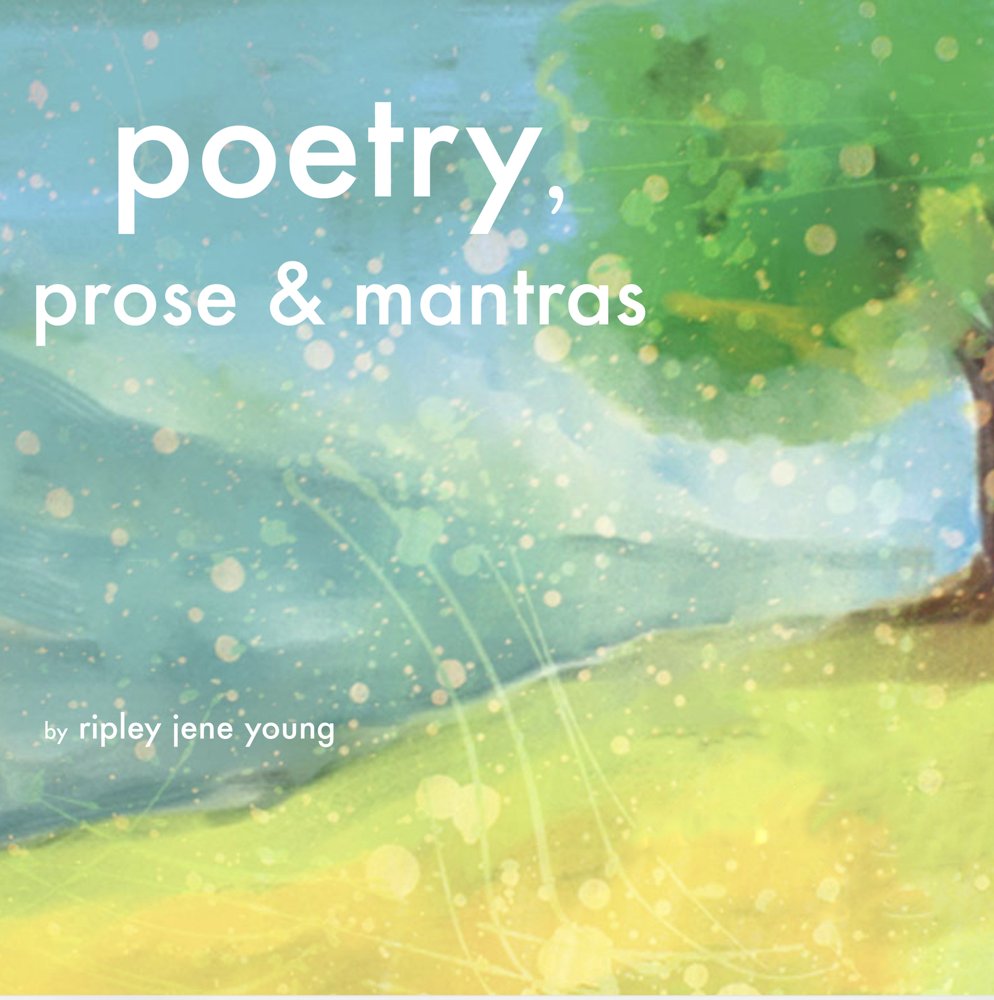
Poetry, Prose & Mantras — the first book, self-published. Where it started.
Twenty-six letters, one voice
How do you scale one idea into a repeatable structure — when you're teaching yourself design at the same time?
The idea for Abundance from A to Z actually started in 2013, right after the poetry book — then got stuck. It sat untouched for nearly ten years until November 2022, when she came back to it and wrote and designed the whole book in Apple Keynote.
The result: Abundance from A to Z, Words of Worth — 26 mantras, one for each letter, each with its own word and color — finished and published in January 2023. The A–Z structure was the first real design system: a constraint that turned "write a book" into "fill a framework," which a one-woman operation can actually finish.
The book shipped as a $14.99 paperback, a $3+ PDF, and a tiny 5×5 special edition. Same words, three formats — the first hint that one idea could live in many objects.
Story pull-out
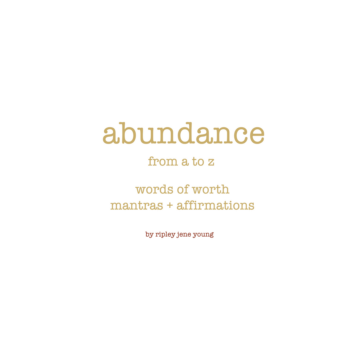
The finished cover — the same art on the paperback, the PDF, and the tiny 5×5 special edition.
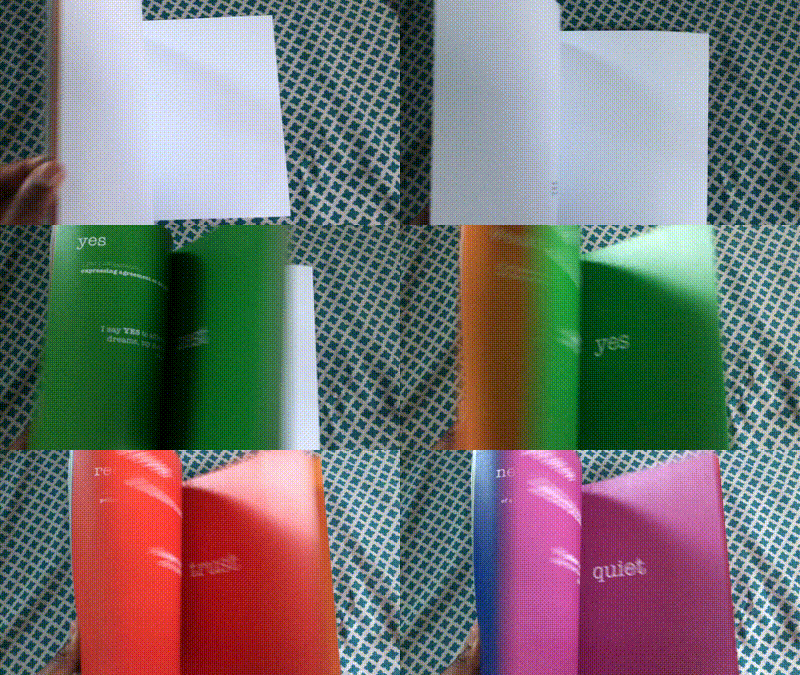
Flipping through the finished book.
The deck, designed in public
How do you turn a book into an object people can hold — when you've never designed a physical product?
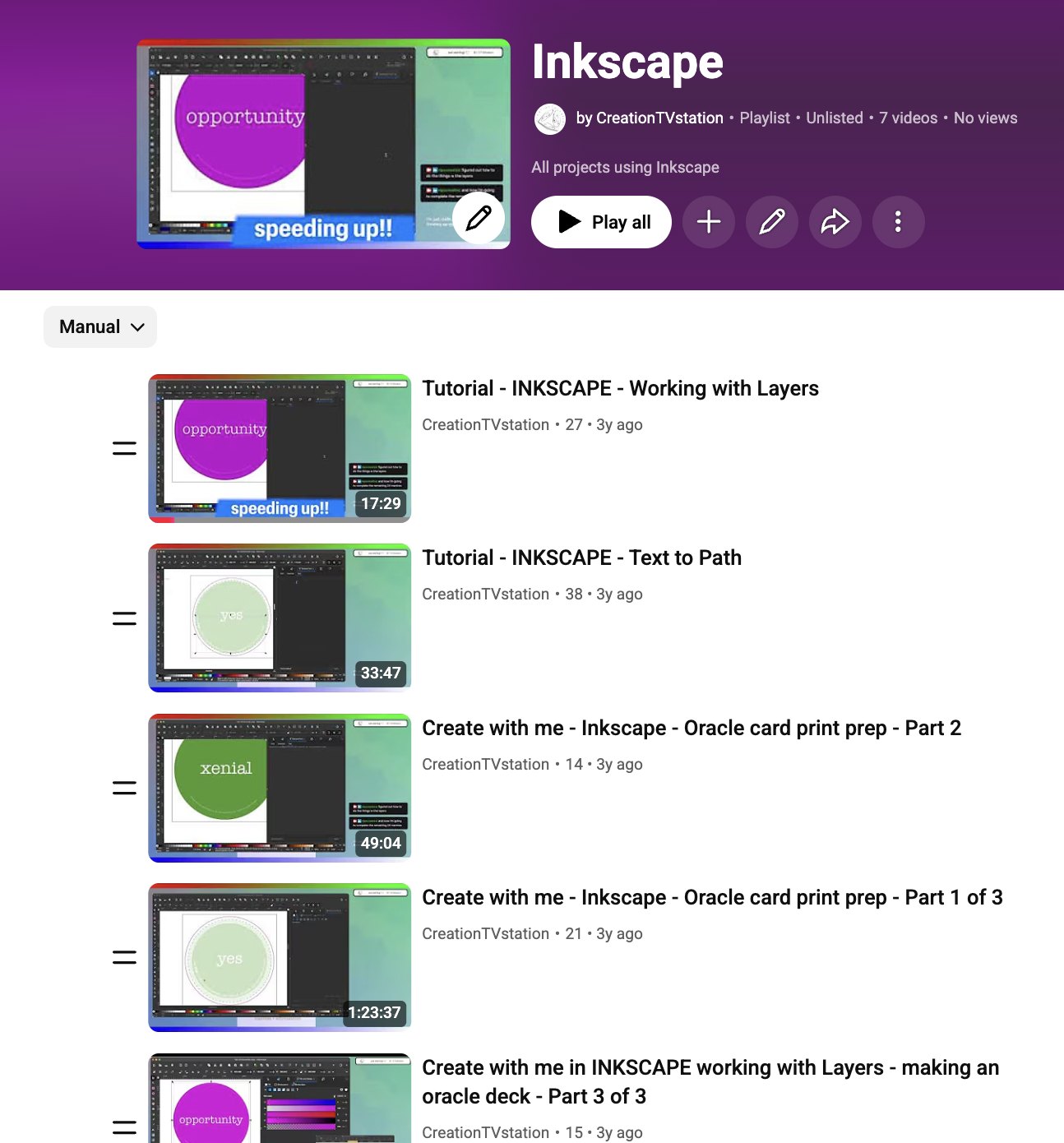
The 26 words became 30 cards: the A–Z set plus four decision cards, designed live on Twitch in the spring of 2023 using Inkscape — free, open-source, and learned from scratch on camera. The Inkscape and GIMP learning curves were the design education: every tool mastered in public, mistakes included.
Print specs were learned the hard way — 3.5″ × 3.5″, bleed, card stock, a rigid keepsake box, a folded cheat-sheet pamphlet instead of a guidebook.
Three separate print runs were really three design tests, each one slightly different. The audience saw every iteration happen in real time — the product was prototyped in public.
Story pull-out
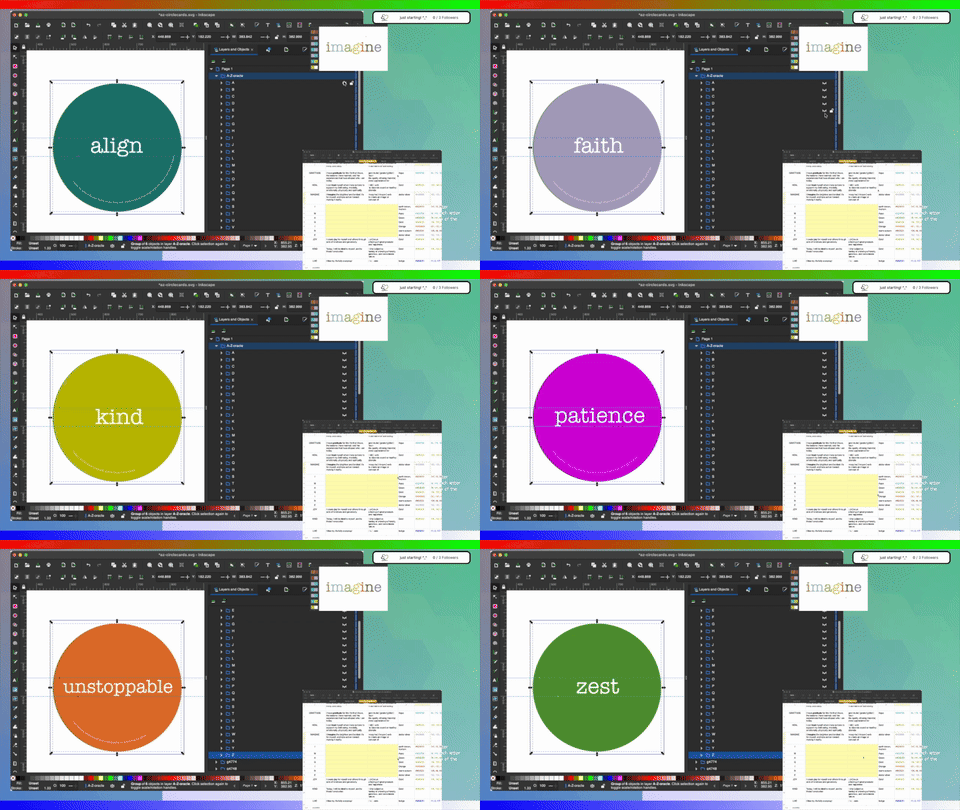
Designing the cards in Inkscape (screen recap).
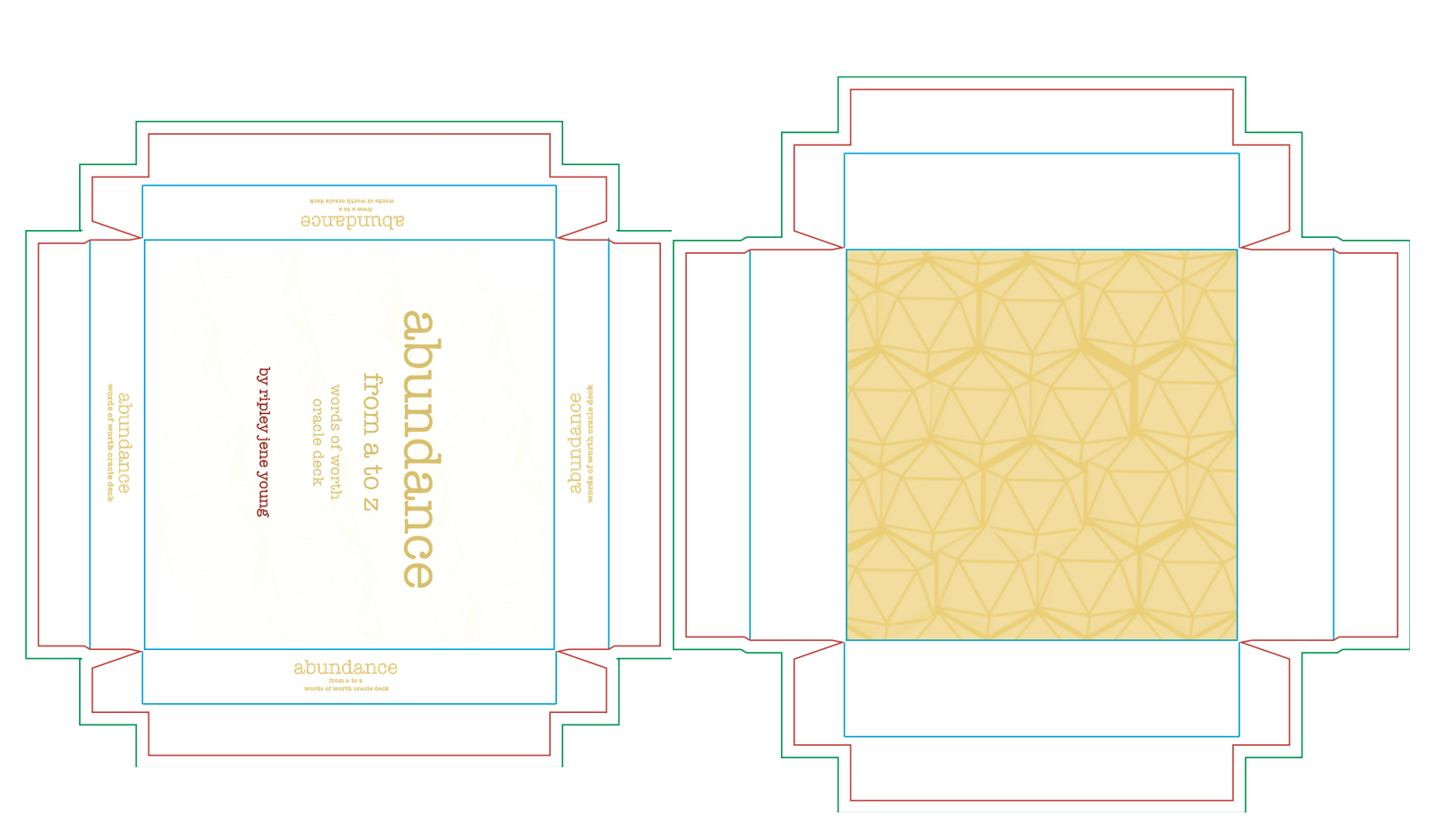
The keepsake box before it was a box — the flat print design, dielines and all.
Every platform has its own rules
Self-publishing means designing for half a dozen platforms at once — and one woman has to learn every one's constraints.
KDP for the paperbacks. Ingram for the hardcover — until the cover printed misaligned and the color didn't bleed, and it got pulled from sale. MakePlayingCards for the deck: no API, just a manual spreadsheet upload per order. Printify for stationery: 52 card images, a sticker line, ornaments, journals.
In autumn 2024 she started sketching the next A to Z book theme — then deliberately paused it to finish the deck instead. Focus won: the card deck launched with MakePlayingCards as the print partner.
And behind all of it, the most analog fulfillment system imaginable: 37 decks stacked at home, packed and shipped by hand.
Story pull-out
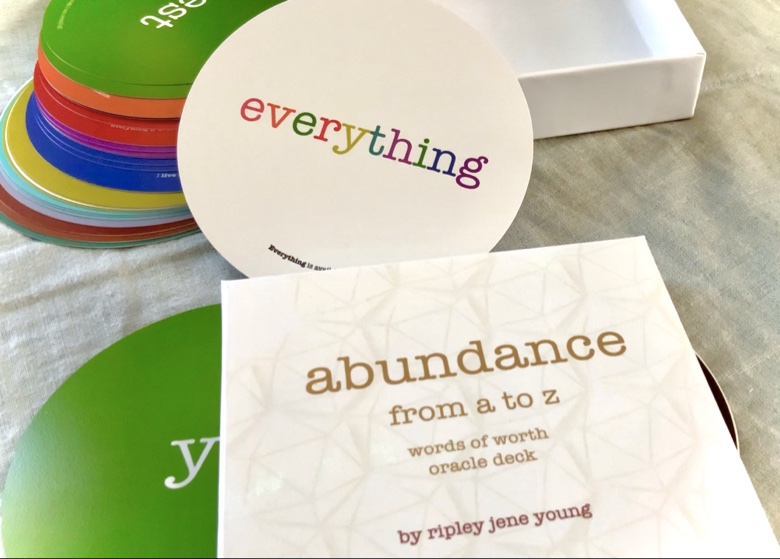
The home inventory — the deck stack with the everything card on show. Every deck is packed and shipped by hand from here.
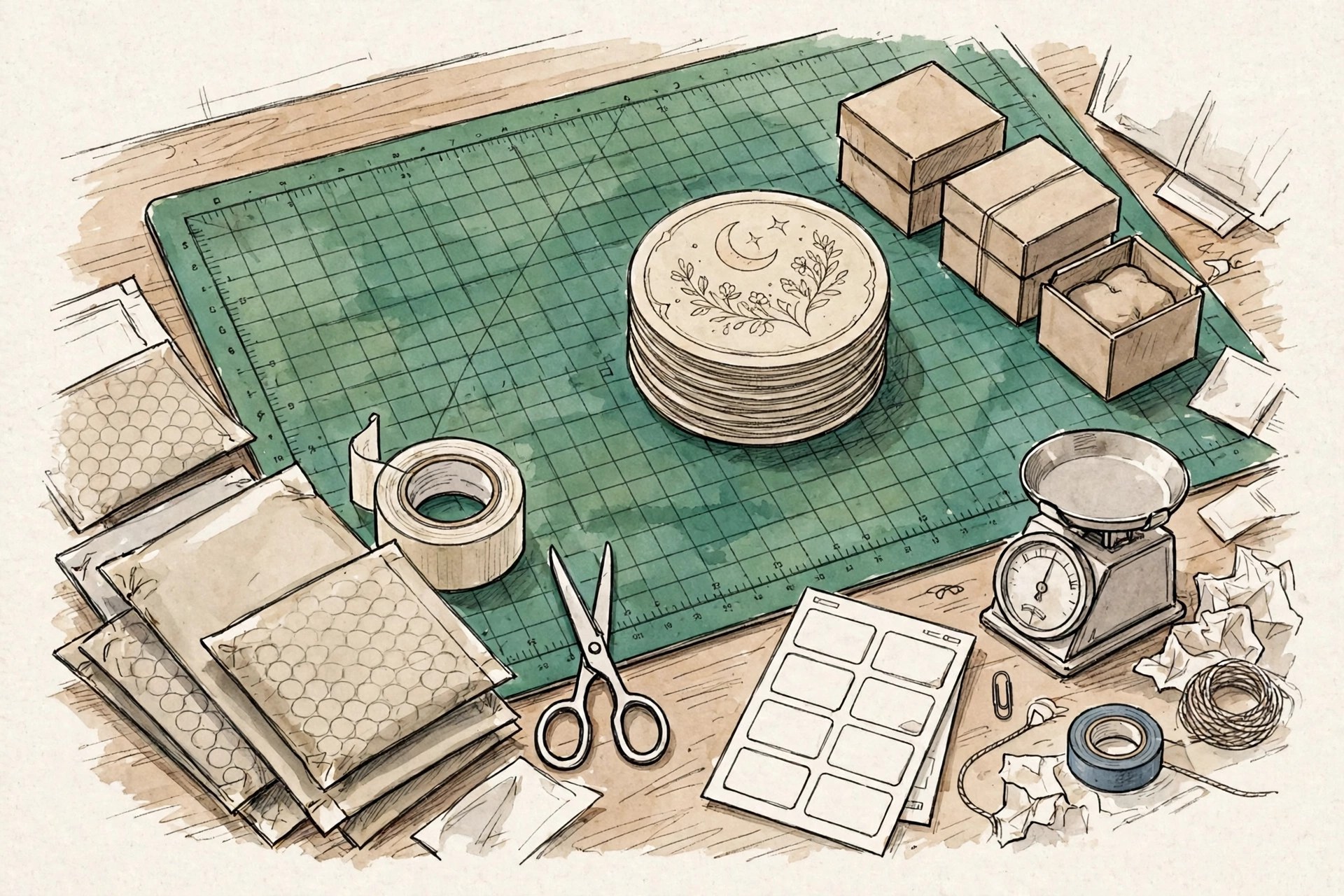
The fulfillment corner, sketched — cutting mat, mailers, labels, and the scale.
Order flow: the site → PayPal checkout → decks packed and shipped by hand from home · stationery made to order by Printify.
From fragments to a system
Every new product made the brand more fragmented — and the buying experience was held together with payment links and a Carrd page.
So the customer experience became a design project of its own. A full CX audit surfaced everything a shopper would trip on: developer-facing copy on the shop page, missing prices, the flagship deck buried in the grid, no shipping or contact info. The fix pass rewrote it all — the deck leads, every price is upfront, the copy sounds like a human.
Then the system got written down: a 14-slide brand book (colors, type, lockups), a deck order page rebuilt price-first, and a real website replacing the link-in-bio era.
Story pull-out
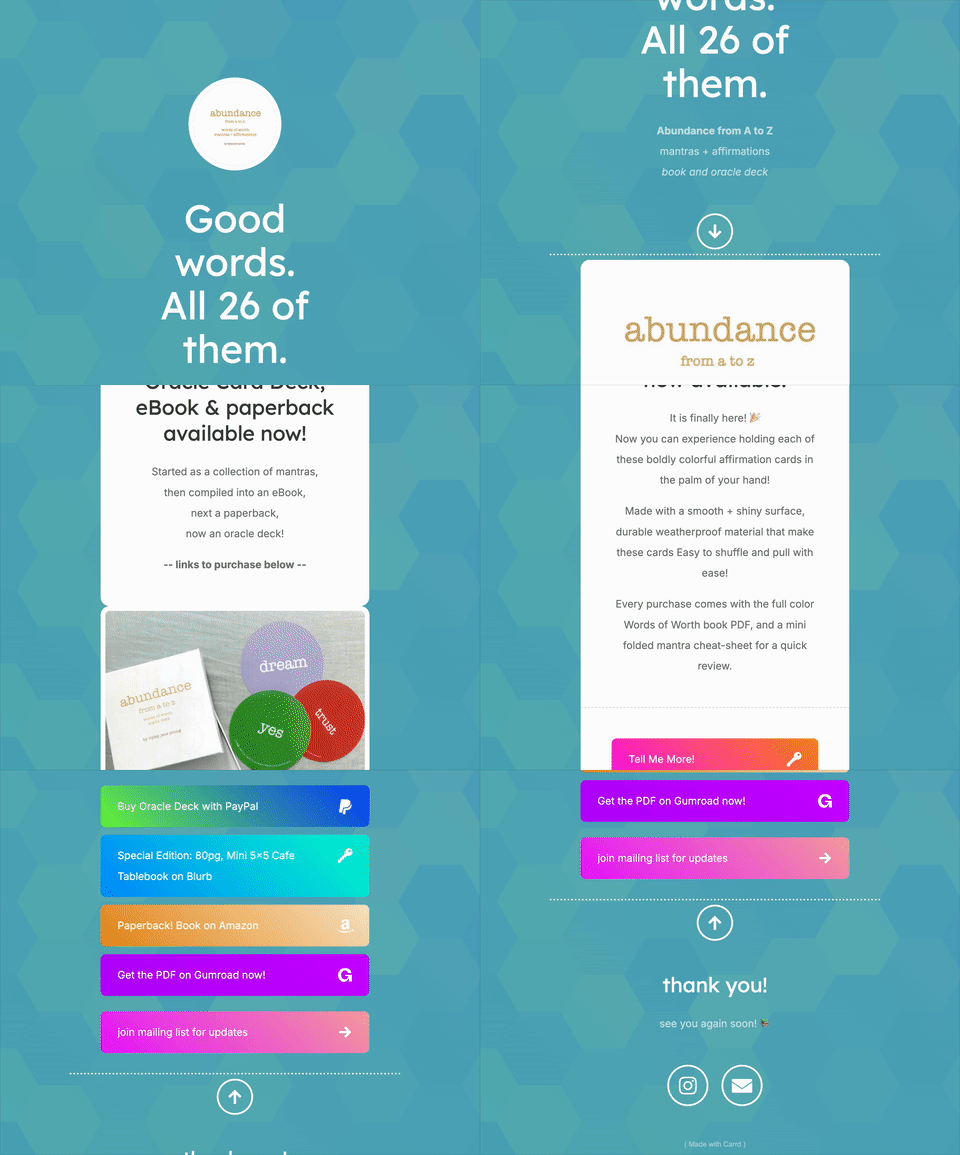
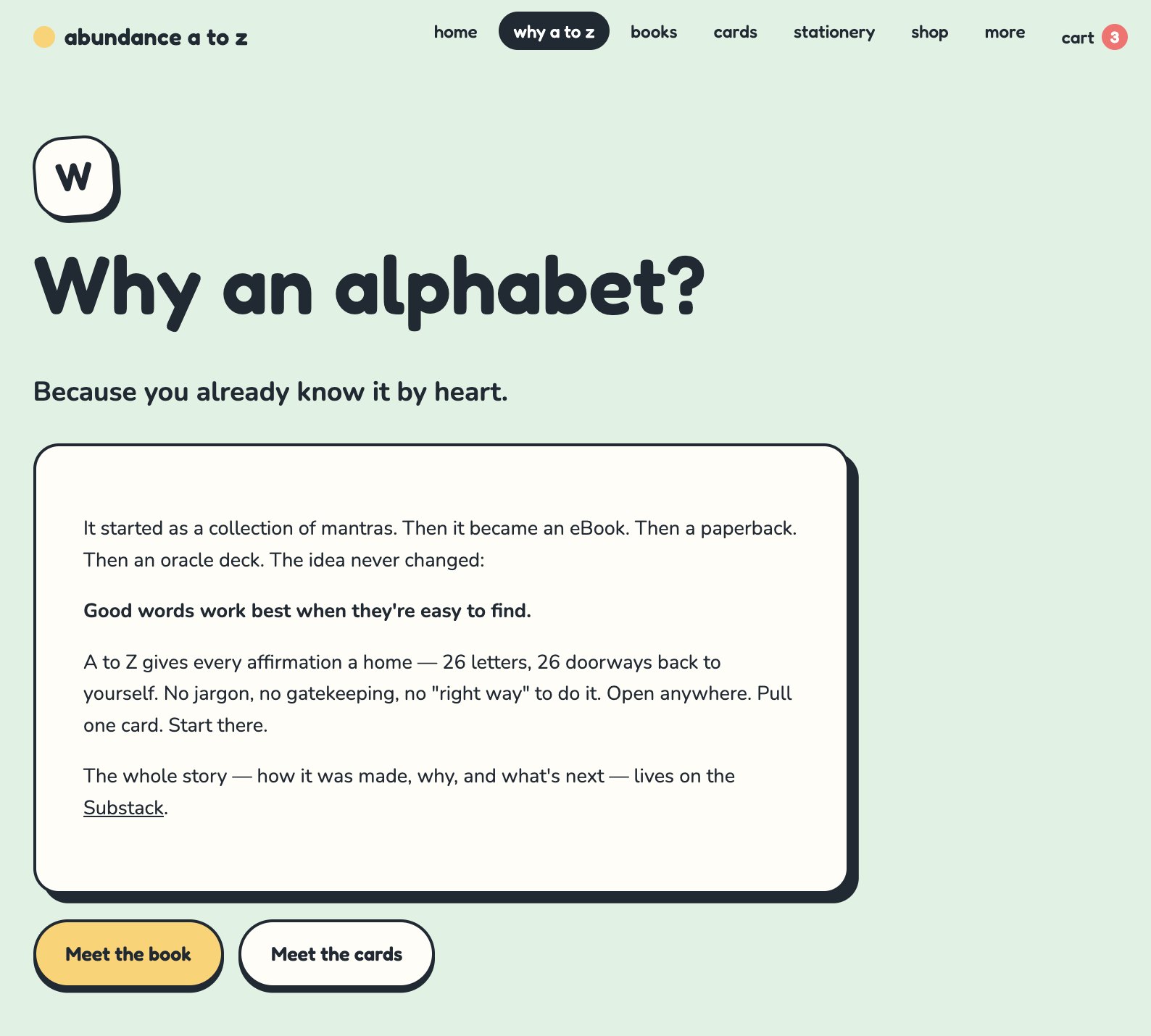
Before: the Carrd page — a cover and a list of links. After: the site itself — the Why page on abundanceatoz.com.
Learning to sell without a sales team
How do you market a brand with no team — and without feeling salesy about work you made with your own hands?
The Instagram had been dormant since December 2022. The comeback post went up September 30, 2026 — and the feed became product-focused while stories carried the human side: card pulls, unboxings, testimonial shares.
Testimonials became a sequenced design project of their own: Ellen's story first, then Mama Dee — a tarot reader who uses the deck live on stream, with full permission to clip and reshare — then Michelle, then Katie. Real people, real order, real consent at every step.
Story pull-out
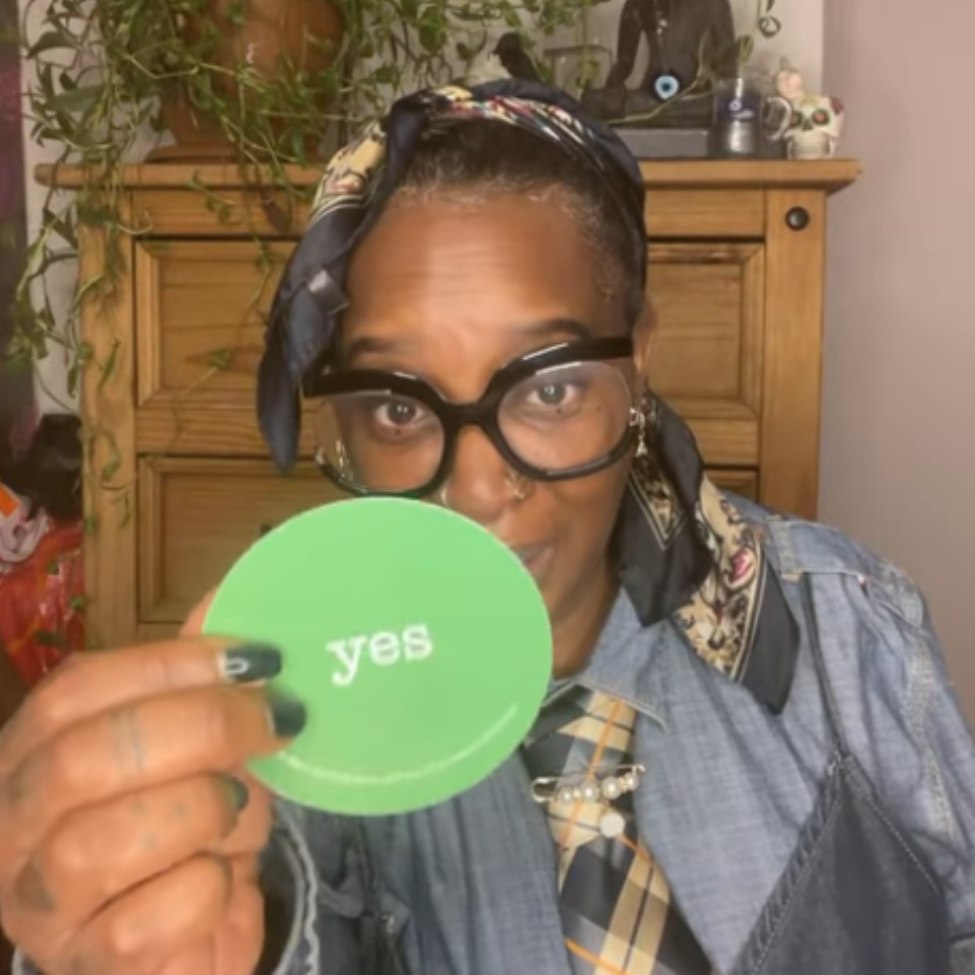
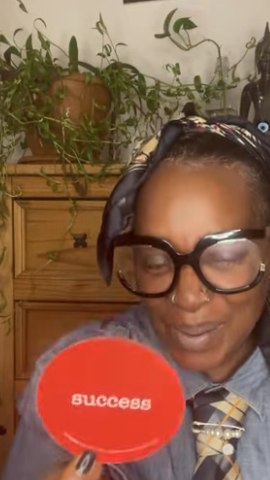
Mama Dee, a tarot reader, pulling the deck live on her stream — the yes and success cards, held up to the camera. Shared with her full permission to clip and reshare.
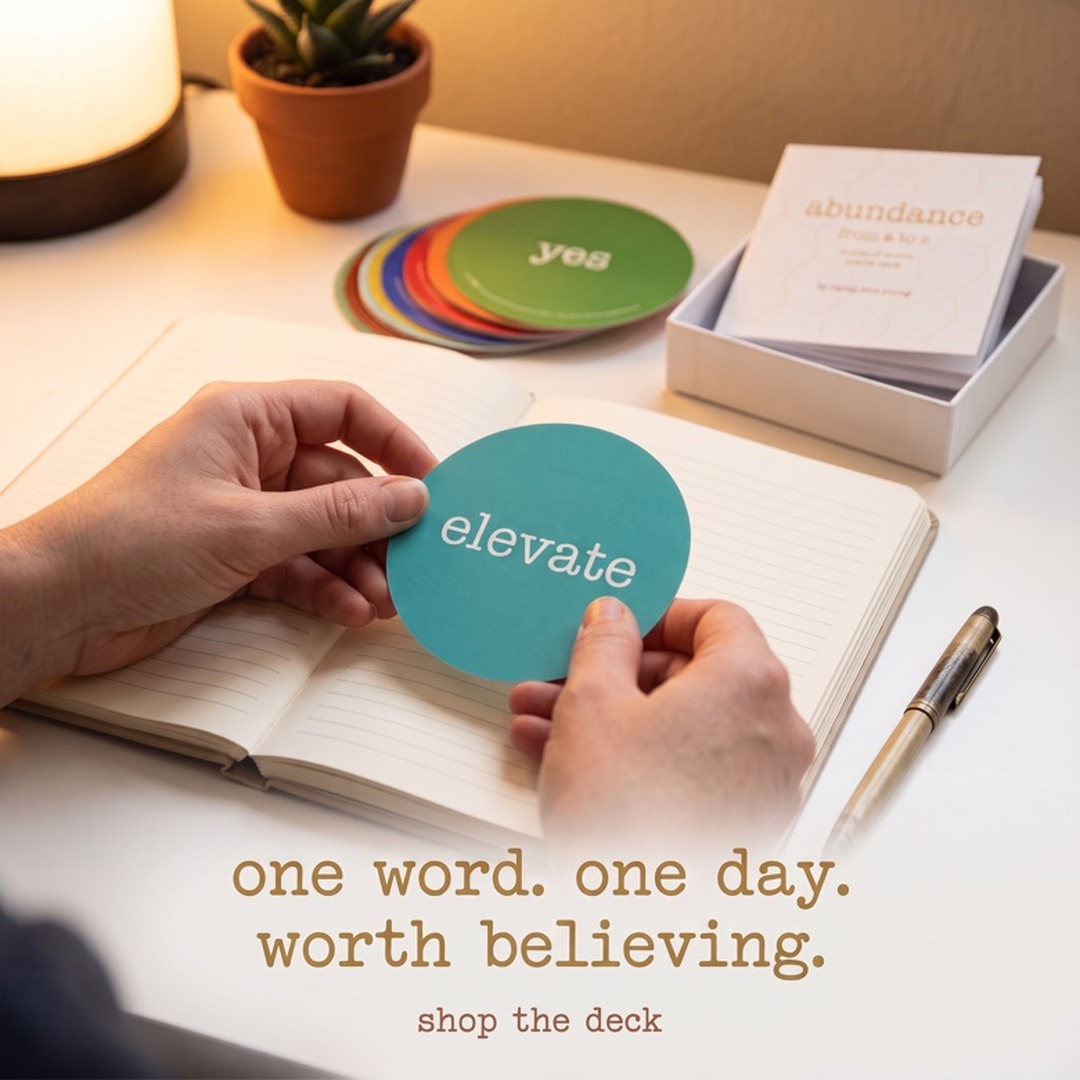
"I really enjoyed reading them. I like that you included definitions for the words and had different colors for the pages." — Ellen, on the book; shared as the first 'kind words' story, October 9, 2026.
The system runs again — on purpose this time
Can the whole journey repeat — deliberately, with everything the first run taught?
The Creative Self is the next book: it began as a Substack series of 50 life lessons on creativity and is becoming a book, a companion workbook journal, and 50 "Creative Command" cards — the same ecosystem pattern as Abundance, but planned from the start.
The cover design is finished — being held for a proper reveal when the book goes to print. The manuscript is in editing now. And the design process ran the same learn-in-public loop: AI explored fonts and placement, the audience weighed in on colors, and a two-year-old doodle of the original book idea became the "before" to the finished cover's "after."
2026 changed the speed of everything: working with Muse AI exponentially accelerated the business development, operations, and logistics — the one-woman operation finally had a second pair of hands.
Story pull-out
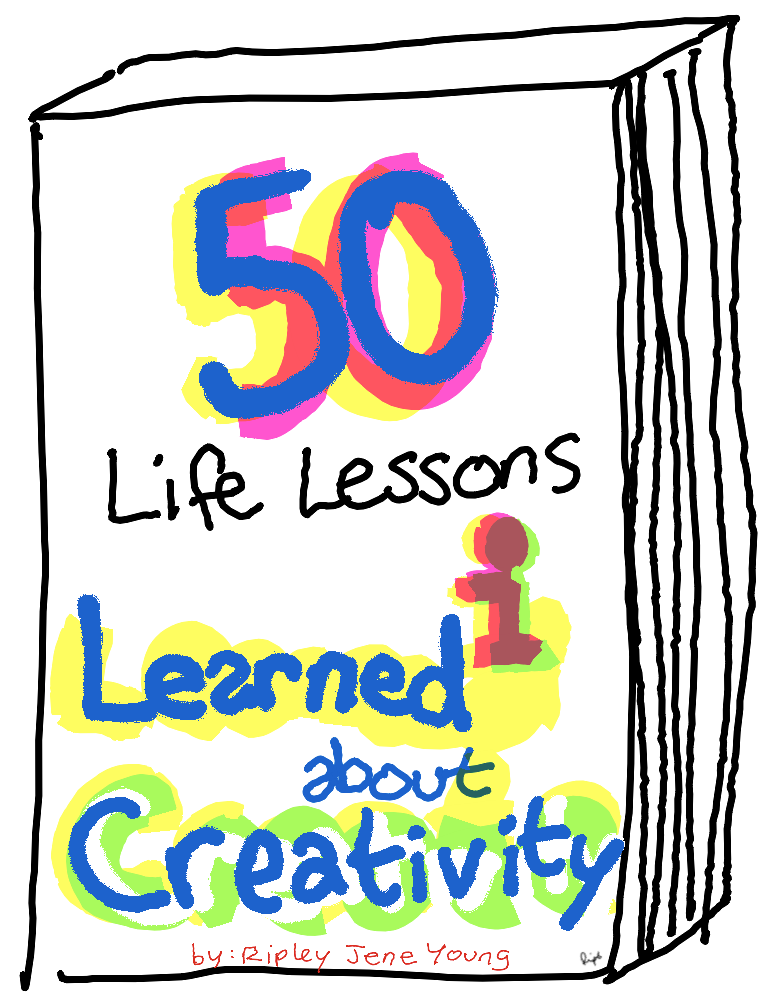
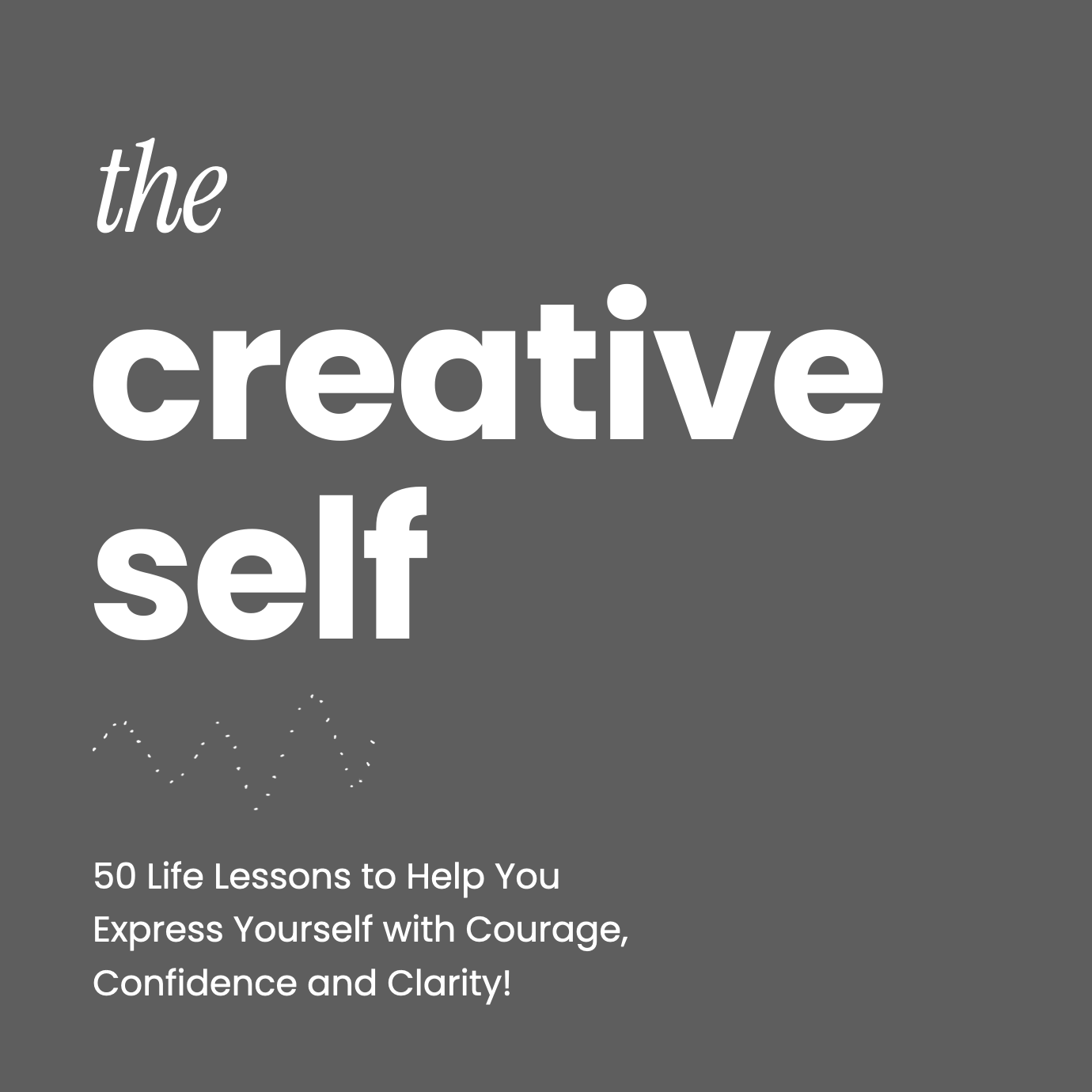
Before → after: the original doodle from two years ago — and the finished cover, in its grey-and-white version.
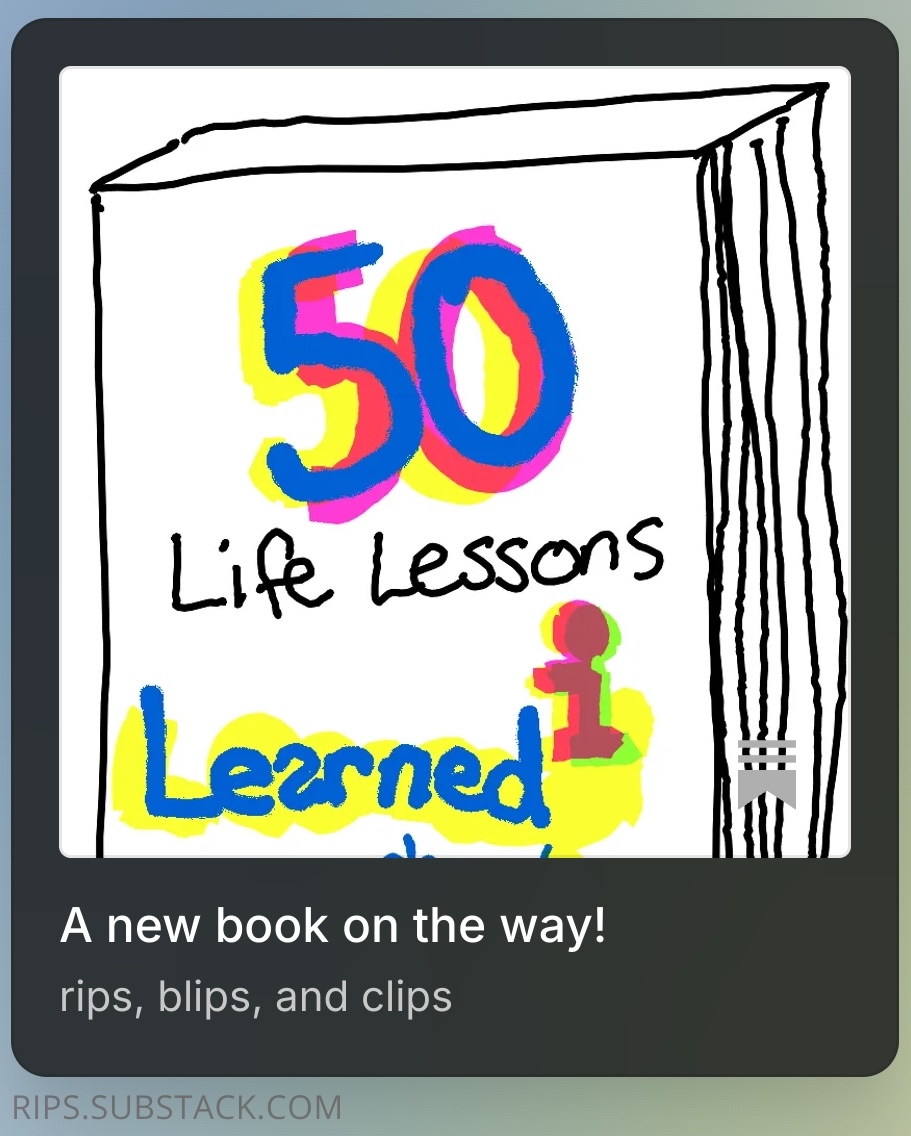
The doodle as the world first saw it — the Substack announcement.
rips on Substack — "A new book on the way" and Creative Self progress updates →
What made this possible
No design team, no agency, no big budget — just the right tools and a willingness to learn each one in public.
Inkscape + GIMP: free, open-source design tools, learned from scratch on livestreams — the entire design education happened on camera, mistakes included.
reMarkable: where ideas get sketched and the thinking gets done.
iCloud: Apple Notes, Numbers, and Keynote syncing across devices — the A to Z book itself was written and designed in Keynote.
Google Workspace: Docs and Sheets syncing across devices, local + cloud backup keeping every version of the business safe.
AI assistants (2025–26): from cover-design exploration to business development, operations, and logistics — in 2026, exponentially faster with a second pair of hands.

AI became my second pair of hands. It cut the admin time spent documenting work and workflows for spreadsheets and SOPs, took on the repetitive design fixes, and automated consolidating information for the brand book and style guides. It helped build this website and its shopping-cart backend, and populated the print-partner platforms from my original artwork — so a one-woman operation could move like a small team.
What I actually made — and who it's for
A live shop: the 30-card Words of Worth oracle deck, plus greeting cards, postcards, gift sets, stickers, and ornaments — all built from the same A-to-Z words. Pop-Up Words of Worth, a free tool that turns the cards into personalized digital greetings. A layered brand book with an official color canon. And this page: a semi-interactive case study walking through the whole arc.
Who it's for: gift-givers, and anyone who wants one good word for their day. The case study is for design-minded folks curious to see what a one-person product brand actually took on in 30 days.
What surprised me
My payment processor closed my account days after I'd proven the checkout end-to-end. Appeal denied — two weeks before launch.
I rebuilt the whole checkout on PayPal — single links first, then an on-site cart afterwards — without moving the launch date.
How much of a "real company" backend one person can build in 30 days, when the systems get designed instead of improvised — with AI's help on the technical backend.
And that my own eye still caught production errors — a wrong-colored card front — that every automated check had passed.
What one woman learned
- Constraint is a design tool. Print specs, one pair of hands, a tight budget — every limit became part of the system instead of fighting it.
- Learn in public. Designing on livestreams turned the audience into a feedback loop and the process into the marketing.
- Design the operation, not just the object. Fulfillment, checkout, platform quirks — if it touches the customer, it's design work.
- Systems beat one-offs. Twenty-six letters. Thirty cards. One visual language. A framework one person can actually finish will always beat a bigger idea that needs a team.
Follow the next build: